
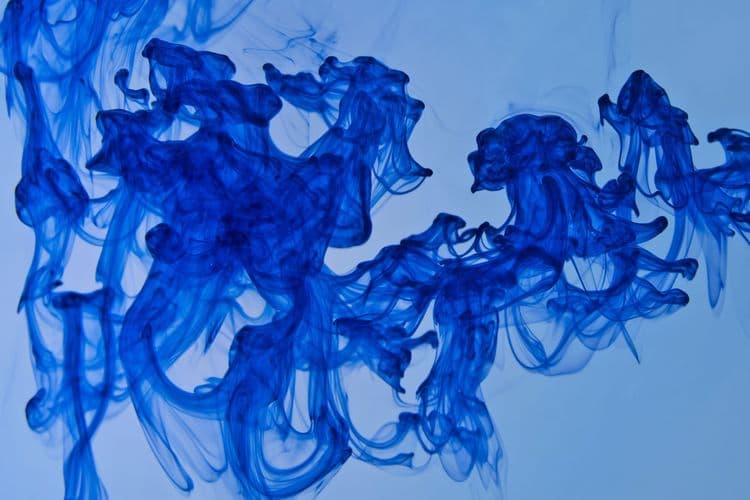
Blue is one of the most beloved colors, yet it is surprisingly rare in nature. Unlike red or yellow, which are created by natural pigments, blue often appears due to light reflection and structural properties rather than actual pigmentation.
Most blue birds, like blue jays and peacocks, don’t have blue pigment. Instead, their feathers scatter light in a way that makes them appear blue—if crushed, their feathers lose their color! Similarly, the ocean and sky appear blue due to Rayleigh scattering, where shorter blue light waves are diffused more than other colors.
Ancient civilizations had trouble producing blue dye. Egyptians were among the first to create synthetic blue pigments, such as Egyptian blue, while the Maya civilization developed an enduring blue pigment still admired today. Indigo, derived from plants, became one of the most valuable dyes in human history.
From the deep ocean to the vast sky, blue remains an elusive and fascinating color, shaped more by physics than by pigment.